
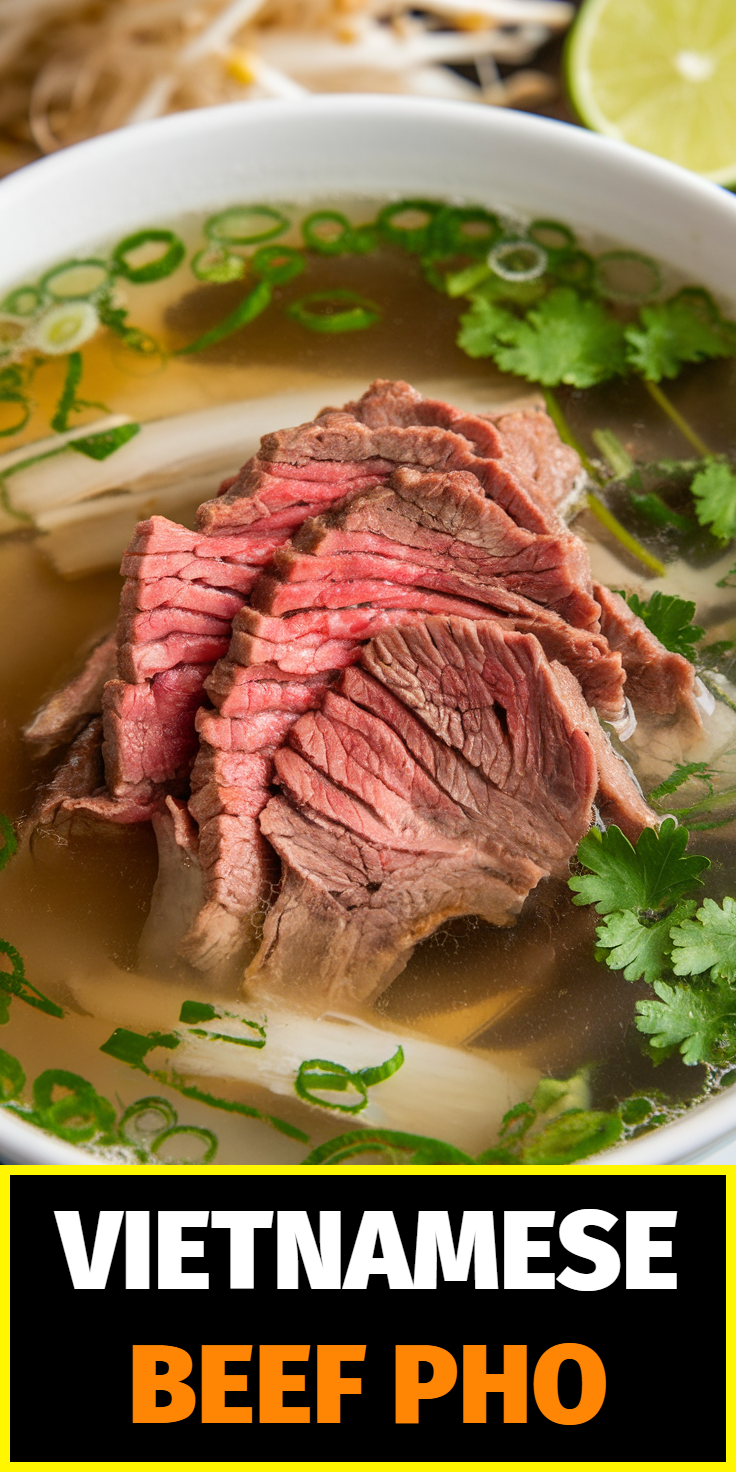
Craving a comforting and flavorful meal? You can easily make delicious Vietnamese Beef Pho right in your own kitchen tonight, creating a wonderfully aromatic and satisfying asian dinner recipe. This classic soup is perfect for a cozy evening, bringing warmth and incredible depth of flavor to your table.
Key Ingredients & Substitutions:
- Beef Bones: Use marrow and knuckle bones for the best broth. You can substitute with beef oxtail or even a mix of bones.
- Beef Flank Steak: Sliced very thinly for quick cooking. Sirloin or eye of round are good alternatives.
- Fish Sauce: Essential for umami. No direct substitute, but use sparingly if you’re new to it.
- Star Anise, Cinnamon Stick, Cloves: These spices define pho’s aroma. Don’t skip them!
- Rice Noodles (Banh Pho): Flat, wide rice noodles are traditional.
- Fresh Ginger & Onion: Charring them adds depth.
- Garnishes: Fresh herbs, lime, and chili are crucial for serving.
Ingredients:
For the Broth:
- 3 lbs beef marrow and knuckle bones
- 1 large yellow onion, halved
- 4-inch piece ginger, halved lengthwise
- 4 star anise
- 1 cinnamon stick (3 inches)
- 5 whole cloves
- 1 tbsp coriander seeds
- 1 tbsp salt
- 1 tbsp sugar
- 2 tbsp fish sauce
For the Bowls:
- 1 lb beef flank steak, sliced paper-thin against the grain
- 1 lb dried flat rice noodles (banh pho)
- 1/2 cup chopped fresh cilantro
- 1/2 cup chopped green onions
Garnishes (Optional but Recommended):
- Fresh basil leaves
- Bean sprouts
- Lime wedges
- Sliced fresh jalapeños or bird’s eye chilies
- Hoisin sauce
- Sriracha hot sauce
How Much Time Will You Need?
- Total Time: 4 hours 30 minutes
- Prep Time: 30 minutes
- Cook Time: 4 hours
- Servings: 6
- Tools Needed: Large stockpot, fine-mesh strainer, large bowl
Step-by-Step Instructions:
1. Prepare the Beef Bones
You will start by blanching your beef bones. Place them in a large stockpot and cover with cold water. Bring to a rolling boil and cook for 10 minutes. Drain the bones and rinse them thoroughly under cold water to remove any impurities. Clean the pot before returning the bones.
2. Char the Aromatics
You will now char your onion and ginger. Place the halved onion and ginger directly over an open flame on your stovetop until slightly blackened and fragrant. Alternatively, you can roast them in a dry pan or under your oven broiler until lightly charred. This step is essential for authentic pho flavor.
3. Toast the Spices
You will toast your whole spices next. In a dry skillet, gently toast the star anise, cinnamon stick, cloves, and coriander seeds over medium heat until fragrant, about 2-3 minutes. Be careful not to burn them. Place the toasted spices into a cheesecloth bag or tea infuser.
4. Simmer the Broth
Now, you will build your flavorful broth. Add the blanched bones, charred onion and ginger, and the spice bag to your clean stockpot. Fill the pot with 12-14 cups of fresh cold water. Bring to a gentle boil, then immediately reduce the heat to a low simmer. Skim any foam that rises to the surface. Add the salt, sugar, and fish sauce.
5. Continue Simmering
You will let the broth simmer for an extended period. Cover the pot partially and let it gently simmer for at least 3-4 hours. The longer it simmers, the more flavor your broth will develop. Taste and adjust seasonings as needed; you might want more salt or fish sauce.
6. Strain the Broth
After simmering, you will strain your broth. Carefully remove the bones, onion, ginger, and spice bag from the pot. Strain the entire broth through a fine-mesh strainer into a clean pot or large bowl. Discard all solids. Your clear, aromatic pho broth is now ready.
7. Prepare Noodles and Meat
You will get your noodles and beef ready for serving. Cook the dried rice noodles according to package instructions until al dente. Drain them well. Arrange the paper-thin slices of raw flank steak in individual serving bowls.
8. Assemble and Serve
Finally, you will assemble your delicious pho bowls. Divide the cooked noodles among your serving bowls, placing them over the beef. Bring your strained broth to a rolling boil. Carefully ladle the hot broth over the noodles and beef. The heat of the broth will instantly cook the thin slices of beef. Garnish with fresh cilantro and green onions, and serve immediately with your desired optional garnishes like basil, bean sprouts, lime, and chilies. Enjoy your homemade asian dinner recipe!
Variation Ideas:
- Chicken Pho (Pho Ga): Substitute beef bones and flank steak with a whole chicken or chicken bones and sliced cooked chicken.
- Vegetarian Pho: Use a vegetable broth base with mushrooms, daikon radish, and carrots.
- Extra Spicy: Add extra sliced chilies or a spoonful of chili oil to your bowl.
- Meatball Addition: Add thinly sliced beef meatballs to your bowl along with the flank steak.
Storage Instructions:
You can store leftover pho broth in an airtight container in the refrigerator for up to 3-4 days. Cooked noodles tend to get mushy when stored in broth, so it’s best to store them separately if you anticipate leftovers. Store cooked beef in a separate container. Reheat the broth gently on the stovetop, then assemble fresh bowls with reheated or freshly cooked noodles and meat.
Frequently Asked Questions (FAQ):
Q: What kind of beef bones are best for pho?
A: Marrow bones and knuckle bones are ideal for a rich, gelatinous broth.
Q: Can I make the broth ahead of time?
A: Yes, you can make the broth up to 2-3 days in advance and store it in the refrigerator.
Q: How thin should I slice the beef?
A: Slice the beef as thinly as possible, ideally paper-thin, so it cooks instantly in the hot broth. Partially freezing the beef for 30 minutes can make it easier to slice.
Q: What if I don’t have cheesecloth for the spices?
A: You can place the whole spices directly into the broth and strain them out with the other solids at the end.
Q: Why do I need to char the onion and ginger?
A: Charring adds a smoky depth and sweetness to the broth, which is a signature flavor of traditional pho.
Q: Can I use different types of noodles?
A: While flat rice noodles (banh pho) are traditional, you can use other wide rice noodles if banh pho is unavailable.